Tuesday, 28 July 2015

Schools of thought

For three days last week I was at something that felt remarkably like a UK workshop on accreditation in higher education. I wasn't in the UK for sure. It was being held at our wonderful Mission Centre (a Conference Centre by any other name) at the other end of the campus where meals are served overlooking the ocean and guests are looked after professionally and lovingly, thanks to Eta, Seru, Kasa, Raymond, Seini and the team. So I wasn't back in Croydon (no disrespect to Croydon...) but could have been, if the material under discussion and the language used to handle it was anything to go by. 

The issue at stake was how to ensure that places offering Theological Education across the Pacific comply* with quality* assurance* frameworks* nationally and regionally. (Spot the jargon *s) So for us, that's the Fiji Higher Education Council requirements (FHEC) and those of the Pacific Qualifications Framework (PQF). We did lots of spouting in initials. 

The body that's supposed to keep a handle on all this, with a 90 page working document of guidelines to prove it, is SPATS... 


...no no - nothing like that. SPATS is the South Pacific Association of Theological Schools whose constituency looks like this.

List of Member Schools
  1. Banmatmat Bible College, Vanuatu
  2. Bishop Patteson Theological College, Solomon Islands
  3. Ecole Pastorale de Bethanie, New Caledonia
  4. Ecole Pastorale de Hermon, Tahiti
  5. Fiji Bible College of Evangelism, Fiji
  6. Fulton College, Fiji
  7. Kanana Fou Theological Seminary, American Samoa
  8. Malua TheologicalCollege, Samoa
  9. Marshalls Theological College, Marshall Islands
  10. Methodist Davuilevu Theological College, Fiji
  11. Methodist Deaconess Training Centre, Fiji
  12. Moamoa Theological College, Samoa
  13. Pacific Regional Seminary, Fiji
  14. Pacific Theological College, Fiji
  15. Piula Theological College, Samoa
  16. Seghe Theological Seminary, Solomon Islands
  17. Sia’atoutai Theological College, Tonga
  18. St John the Baptist Theological College, Fiji
  19. St Athanasius Coptic Orthodox Theological College, Fiji
  20. South Pacific Nazarene Theological College, Fiji
  21. Takamoa Theological College, Cook Islands
  22. Talua Ministry Training Centre, Vanuatu
  23. Tangintebu Theological College, Kiribati
  24. University of Auckland School of Theology, New Zealand
  25. United Theological College, Australia
So there we all are. Did you spot PTC?

Now it's a great and Godly thing to be working on 'quality assurance' across the board in Theological Education and I'm personally all for it. God's worth it and so are our Churches and Schools. Those who've been working on the finer details of the SPATS guidelines deserve rapturous applause and extra coconut cake for a start. What a job! So there was much in the workshop that was praiseworthy and encouraging.

But... and it IS a sizeable but. What's really, really tricky and frustrating and gets the teeth grinding for me is that because such large chunks of the standards and guidelines originate in non-Pacific contexts - the UK is dominant, but Australia and New Zealand are up there too - and are worked on in English medium, they just don't take root in natural soil somehow. There's real discomfort and dissatisfaction.

A professional theological educator who knows the Pacific well began by presenting on the topic of quality assurance and the kind of 'product' theological schools should be turning out. The right kind of minister, primarily. 'We all know what quality is when we see it', he said cheerfully. 'We can look at it and see the evidence that standards have been met'.

Mmm - well, we kind of know what you mean, but is there really consensus around something as slippery as quality? Does it translate into the Pacific context with the same assumptions and meaning as there might be in the UK? Is there a 'dynamic equivalent' (we like that term in mission studies!) which the Pacific recognises? 

Musing further on the translation aspects of it all, we open up a whole new can of tuna fish linguistically. How do you translate 'critical, reflective practitioner' into Samoan, Tuvaluan or Fijian, if you please?

In the lunch queue, I asked a Fijian colleague teaching at the Methodist College not far away how you translated 'quality' or 'standard' in i-Taukei Fijian. 'It depends what you're talking about', he replied, searching mentally for examples. 'If it's the quality of food - like meat from the lovo (earth oven) that would be a completely different thing from the quality of someone's essay, or indeed the quality of someone's life - like who a 'good' (quality) minister might be'. 

Fortunately, it was then indeed time to enjoy some 'quality' local lunch fare from the Mission Centre kitchen....

My recent veg shopping from Suva market including fab local cauli!

Theological Education by Extension won't escape the rigours of new accreditation processes either, but perhaps we'll excel on enthusiasm. A few weeks back we did a workshop in Labasa and some assignments are now coming in on the back of that from students - average congregation members - having a go at a Certificate (entry) level Introduction to Biblical Studies course. I enjoyed the spirited writing in these!


Let's read the Bible and go 'Wow - my my my!!' more often eh? Then more wows urged on with highlighter pens...


The author had written on the assignment's cover sheet...


And a timely reminder that I should similarly learn to discipline myself, even though I'm a Methodist Mission Partner. Might you add your own personal sentence at this point?

And then, blissfully distant from the world of accreditation and assignments, a baby was born. Crystal Valerie (oh yes!) Tuilomani Kalouniviti made her entrance on 26th July to the absolute joy of her parents Lome and Koli. She is my namesake - yaca (pronounced yatha) and what a delight and honour that is. God Bless her and her wonderful parents as their new family takes shape.

Allow me to introduce you: on the day we first met, and then all dressed up and raring to go home from hospital. 

Thanks be to God for baby Crystal - so sparkling, precious and new.


Saturday, 18 July 2015

Sporty and Spiritual

You've been following the 2015 Pacific games in Port Moresby, Papua New Guinea of course. No? Why ever not, pray? Latest coverage c/o Fiji Village here.


Team Fiji in the running for 8 gold medals today
By Ronal Deo and Meli Tavaga
Saturday 18/07/2015

Men's Beach Volleyball team Wise Raratabu and Waisale Suka
Team Fiji is aiming to win gold medals in Netball, Boxing, Hockey, Beach Volleyball and golf in the final day of Pacific Games.
Fiji Pearls will meet the PNG Pepes in the gold medal final at 3pm today.
Fiji remains unbeaten in netball after a successful victory over Samoa 64-48 in the semifinal playoff last night.
In the men’s heavyweight 91kg boxing division Fiji’s Viliame Vitukalulu will fight Tahitian Boxer Heimata Neuffer in the gold medal final at 1pm.
In the welterweight final Fijian boxer, Winston Hill will face Louis Danglebermes of New Caledonia in the gold medal final at 1pm.
In the light heavy weight division, Sina Ruata will fight New Caledonian Boxer Luke Hema in the gold medal final at 1pm.
In women’s hockey, Fiji will play Papua New Guinea in the gold medal final at 3pm today.
Yesterday Fiji thrashed Tonga 21-1 in the semifinal.
The men’s hockey team will also take on Vanuatu at 4.30pm today in the gold medal final.
While in Beach Volleyball, the Men’s team has qualified for the gold medal final at 4pm today against Papua New Guinea.
Looking at the medal tally, Papua New Guinea is still leading with 76 gold, 62 silver and 57 bronze, New Caledonia is in second place with 57 gold, 47 silver and 52 bronze, Tahiti is in third place with 35 gold, 30 silver and 36 bronze.
Team Fiji is in fourth place with 29 gold, 39 silver and 34 bronze.

We got gold in the men's singles lawn bowls too. Splendid effort, chaps! Here's Semesa Naiseruvati...


Not to be outdone, Pacific Theological College had Sports Day today and we all leapt about on the main field in various directions doing all sorts of things from egg and spoon races (well, small citrus fruit and spoon) to volleyball. White team against blue team. White won (our team) but only because of the agility and enthusiasm of our younger players! I expect some revealing photos will inevitably get circulated on social media, at which point I'll take a view on whether they're appropriate for mission partner blogging...

The warm up for Sports Day was Tabata, ably led by Filemoni and Elena. I didn't know about Tabata before coming here and so Googled it...

Tabata training is one of the most popular forms of high-intensity interval training (HIIT). It consists of eight rounds of ultra-high-intensity exercises in a specific 20-seconds-on, 10-seconds-off interval. It may only take four minutes to complete a Tabata circuit, but those four minutes may well push your body to its absolute limit.

To be honest, I think we were doing a slightly less specific and serious version, which was fine by me...


From the sporty to the spiritual. It was, as ever, a joy to lead the Holy Communion service in the PTC Chapel last Friday morning.  Here's what it looked like..


This last hymn is included in PTC's hymn book and is by Elizabeth J Smith. We sang it to the tune 'Duke Street', with an awareness, I think, that all our churches - of whatever denomination - need this kind of wake up call.

My reflection (mini-sermon) was as follows:


Mark 6.56 – They begged him that they might touch even the fringe of his cloak; and all who touched it were healed. 

The fringe, just the very edge, just the tassel (κρασπέδου/kraspedon in the Greek) perhaps, of the prayer shawl that the law required a Jewish man to wear. We can find the instructions about this in Numbers 15 and Deuteronomy 22.12. Tassels hung there as a reminder of the commandments. 

At the end of this passage, which we can find quite emotional if we really enter into it, the most vulnerable people, the sick desperate for healing are brought by their friends and relatives to lie on mats at the market place, begging to touch even the fringe of Jesus's garment, because they dare to believe the healer’s power will be there. Cultural superstition? Traditional expectation? Or the prompting of the Holy Spirit – today there is something for me – God’s power is at work for me, even though I lie or sit at the very outer edge of society, even at the fringe. 


Whenever we think about this touching of Jesus’s garment, I reckon most minds go back to the familiar Gospel story of a particular woman in the crowd who reached out to touch; to make contact with Jesus for her own healing. In Matthew’s version - chapter 9 – and in Luke's version - chapter 8 - she’s had severe bleeding, a shameful thing culturally, and the text is clear that she touches the edge of his cloak in hope. In the NRSV - the fringe. So it’s the same message as in our reading today from Mark – the ones on the very edge of society are reaching out to grasp for hope at the very edge of the garment. 

But it’s interesting to remind ourselves that Mark’s gospel has already told the story of the woman with severe bleeding earlier on in his account of Jesus's life – in chapter 5 – and Mark actually doesn’t mention that ‘tassel’ word – or the very edge of the garment. That detail is missing. And Mark adds a little extra something too – Matthew and Luke don’t have it – in Mark 5.27 – this woman had heard about Jesus for herself. She’d also had money to spend on doctors, we're told, so maybe a women not quite so on the edge economically? Who knows. She had heard, Mark tells us, about Jesus and she makes a decision to get near to him and places herself – very controversially – saying: If I can just touch his clothes. Not merely the edge or the fringe. The cloak, the clothing, the garment. The ‘begging’ word is not here, nor is that attitude of, ‘If I may be permitted to touch just the very edge because it’s all I’m worth’. The crumbs from under the table....'  No. Perhaps she says - let me reach out for more than that. 

Drama:

Dr Rayappan has kindly agreed to play the role of Jesus for a few moments and I'll take the role of the woman who reaches out. Watch and see which of these two scenes speaks to you most powerfully.

1. Jesus is walking around – not looking at the woman – she approaches very timidly – crouching – just reaching out for the very edge of his garment – a fleeting touch - then immediately retreats in fear.

2. Jesus again is just walking around – not looking at the woman – she approaches much more intentionally and boldly, moving alongside him and grasping his arm in a firm grip. He turns to look.

In Matthew, Luke and Mark’s versions of the woman’s healing – whatever the touch looked like – edge or full garment - God’s power through Jesus was hers. All the gospel versions are clear on that. God’s amazing grace and abundant mercy laughs in the face of human discrimination. It doesn't ask first, who's teetering on the edge or who's at the centre. Jesus has compassion for ALL the crowd who are like sheep without a shepherd and teaches them all many things without first separating them into faculty and support staff, residential and extension students, BDs and MThs and so on and so forth - the many categories of humanity we seem to invent at PTC.

No, God doesn't favour the full garment and neglect the fringe. The question is whether WE believe the outer edge, the fringe, the margin is all we’re ever permitted to grasp at? A place which will keep us in our place. Or, whether we dare to grasp intentionally, and maybe culturally inappropriately, for some more of the real garment.

Not because we, in ourselves, are ever worthy. We're not. But because our amazing God has a passionate love and longing for those at the fringes to be first at the feast. 


We also enjoyed singing Kevin Nicols' hymn for Holy Communion, deeply profound in its sheer simplicity. For now, I'll leave you with that. God Bless.


In bread we bring you Lord, our body's' labour
In wine we offer you our spirit's grief.
We do not ask you, Lord, who is my neighbour?
But stand united now, one in belief.
For we have gladly heard your Word, your holy Word
And now in answer, Lord, our gifts we bring.
Our selfish hearts make true, our failing faith renew, 
Our life belongs to you, our Lord and King.


The bread we offer you is blessed and broken, 
And it becomes for us our spirit’s food.
Over the cup we bring, your Word is spoken;
Make it your gift to us, your healing blood.
Take all that daily toil, plants in our heart’s poor soil, 
Take all we start and spoil, each hopeful dream.
The chances we have missed, the graces we resist, 
Lord, in this Eucharist, take and redeem.


Tuesday, 7 July 2015

I watch you - you watch me

Let's start this post with a dip into 18th century Methodism and the splendid 'strategic plan' John Wesley had for practical, pastoral care of Methodist members. For the full article, visit the Wesley Centre online.
Give us a smile John....
On Thursday, April 25, Wesley called together in London several earnest and sensible men, told them of the difficulty of knowing the people who desired to be under his care, and after a long conversation they adopted the new plan of classes. "This was the origin of our classes at London," writes Wesley, "for which I can never sufficiently praise God; the unspeakable usefulness of the institution having ever since been more and more manifest."
It was soon found impracticable for the leader to visit each member at his own house, and so it was agreed that the members of each class should come together at some suitable place once a week. Wesley writes: "It can scarce be conceived what advantages have been reaped by this little prudential regulation. Many experienced that Christian fellowship of which they had not so much as an idea before. 
They began to bear one another's burdens, and naturally to care for each other's welfare. And as they had daily a more intimate acquaintance, so they had a more endeared affection for each other."
After the division of the society into classes there came the institution of weekly leaders' meetings. The leaders were untrained men, and the objection was raised that they had neither gifts nor graces for such a divine employment. Wesley, however, quietly remarked, "It may be hoped they will all be better than they are, both by experience and by observation, and by the advices given them by the minister every Tuesday night, and the prayers (then in particular) offered up for them."
On February 23, 1743, John Wesley sent forth the General Rules in his own name, and on May 1 Charles Wesley's name was signed to the important pamphlet. The society was defined as "a company of men, having the form and seeking the power of godliness, united in order to pray together, to receive the word of exhortation, and to watch over one another in love, that they may help each other to work out their salvation." 
All very edifying, you might say, but any particular mission-partner-in-Fiji connections? Not half! We were summoned this week to do exactly the same as Wesley urged: to watch over one another. They missed out the 'in love' bit, but never mind - I'm sure it was implied - as our new Schools Neighbourhood Watch scheme was inaugurated in style.
We'd had a talk in College from the local police about it all with a big emphasis placed on neighbourhood policing and community relations. 'I watch you and you watch me' is the catchphrase, and as there are nine schools in our immediate neighbourhood - primary, secondary and adult theological - we won't be short of folk to watch over.


Here we are on launch day waiting to march to Suva Grammar with students from other local schools. Once inside the grammar school grounds, there were formal speeches from chief guest the Deputy Commissioner of Police, cake cutting and the unveiling of huge sponsored billboards - one for each school. After the formalities, afternoon tea in abundance was served of course, followed by terrific entertainment from the Police band who are just amazing and full of humour too. You're never quite sure what they're going to do next, with or without an instrument. 


And yes, there was a shiny new sponsored billboard unveiled for our College. 

It came as a bit of a surprise though, to discover that Theological Education is now apparently sponsored by Tuckers ice cream.

O taste and see that the Lord is good....


Saturday, 27 June 2015

First Birthday and Baptism


For Wendy Pavni Priyanshi Chand, daughter of Saleshni Wati and Ramesh Chand. It was a great honour to have been invited to baptise Wendy today at Nanuku Church in Vatuwaqa as part of the morning service. Then it was back to Saleshni and Ramesh's home for the cutting of the birthday cake, more prayers and then lunch - for about 50-60 people. Everything had been beautifully prepared and organised by Wendy's own family and the wider Church family. Small community churches do big stuff brilliantly, don't they? Maximising limited space, making food and resources multiply before your very eyes, and opening homes and hearts to everyone. God Bless Wendy and her families - biological and spiritual. Enjoy this snippet of video and the pictures.


Thursday, 25 June 2015

I'd never turned right...

...at the T junction where Queen Elizabeth Drive (the sea front/sea wall that runs past College) meets the main road, about a 20-30 minute walk away. No idea why, really. I'm always stomping down that way for exercise and fresh air, ocean on the right, through the newly landscaped picnic park by the ancient mangrove swamps and past the first part of Laucala (pron. Lauthala) Bay. It's part of what's been labelled commercially now (by Nestle - discuss) as the Milo Mile. 

Anyhow, as today (Friday 26th June) has turned out to be a public holiday (these things suddenly appear, I must try and keep up) I've been out walking for three hours before settling down to read and comment on another couple of chapters of someone's MTh thesis. This evening, it's the closure ceremony and farewell feast for the Peacebuilding course that's been here for three weeks - mentioned in the last post - and we're invited to go and join in, so that'll be a good time of affirming all the great work that's gone on. So, a nicely balanced Friday: pleasant breezy walking; some concentrated reading; a communal celebration.

When you do turn right at the end of the road - reverting to where we started - it's amazing what you discover. Possibly the prettiest Police Station in the world for starters!


Then the sites where a few of our neighbour educational institutions sit...


...and then the ultimate seaside discovery


I didn't sample on this occasion but will report back in due course should that occur. These things matter.


A couple of important meetings at PTC have also mattered this week. The first was for those of us who are Faculty members to consult among ourselves about whether we want to recommend any changes to the Pacific Theological College's Constitution and bye-laws at the forthcoming Council meeting - the Governing Body. Full Council meets every two years; Executive more often, but it's a full Council this year, so we need to get our acts together by the end of July to give sufficient notice of anything we feel led to raise. And there are matters that we should definitely give a push on. Faculty are free to discuss and recommend through our representative, and I sit on the Executive so can also be alert for what's coming. I found myself thinking, 'Mmm - been here before...' recollecting experiences of other Church and College committees. I  haven't been here before of course, so the human and cultural dynamics naturally differ, but the issues are disturbingly similar. (i) How to inspire, convince and lobby for critical change when saddled with impenetrable and sometimes inconsistent legal documentation. (ii) How to ensure that those who serve on Governing Bodies do so vocationally and sacrificially: with real hearts for service and the desire to fully engage and contribute both at meetings and in the life of the institution as a whole.


The second meeting was about whether PTC might want to take on board a Consultant to advise on organisational development, strategic planning, fundraising and the like. The 'offer' stems from a European organisation whose way of working stipulates that the 'person' must come by way of an expatriate secondment. Why? No one from the Pacific available if a bit of funding was put behind them? 

And so the global mission questions repeat and repeat - a bit like persistent indigestion.

But hey. The latter of the two meetings was held in the extremely 'posh' PTC Boardroom - squishy leather seats, shiny table, air-con: not a place to which we are frequently summoned.

#scary  #needsmartsuit


This public holiday which crept up on me is actually called National Sports Day with a big Government and NGO emphasis on health and wellness. Jocularity in the Fiji Times about whether Government ministers would be seen with their jogging gear and water bottles in Albert Park. 

But, joking aside, health and wellness is so vital. If you pray, please hold in your prayers just now...

... some of our dear staff here at PTC who bear burdens of un-wellness: that they may find healing and restoration

... those who have left PTC or taken leave because of troubling circumstances: that they may find new life and purpose

...one of the families at Nanuku settlement whose son faces a difficult spinal operation next week, in the hands of Fiji's only neurosurgeon: that all may be well

Here's some of the publicity snapped at the park this morning, reminding us of some important basics for fullness of life.


Sunday, 21 June 2015

Principles and peace


Pretty much ready for the shelves now: our latest BD course on Ethical Principles. The idea being that it shouldn't stay on the shelves- it should fly off them, around the Pacific, so that good, solid degrees by distance learning can be available to anyone with the commitment to slog it out. 

The course author, Jack Hill, previously served as  Lecturer in Church and Society here at the Pacific Theological College  from 1989-1993. Then after teaching in a South African university for three years, was Head of the Department of Theology and Ethics here from 1998-1999. He helped develop PTC’s first Masters Programme in Practical Theology. Most recently he's been Professor of Religion at Texas Christian University, Fort Worth in the USA. We're very grateful to Professor Hill and other former staff with experience of the Pacific when they find time to write for us. And we're looking forward to current staff coming up with the goods too, with lots of up to date Pacific material included. A gentle nudge to my lovely colleagues!


When's the last time you or I had a serious think about our Ethical Principles eh? Want a taster of the course for free? Well, here's how it starts.


Unit 1    Love Thyself

1.1        Outcomes.  

After successfully completing this unit, you should be able to:

  • Articulate the central questions of ethics, and identify a few elements of your own Christian moral conscience;
  • Describe tensions in ethics, especially between the individual and community;
  • Explain how Jesus’ Great Commandments constitute starting points for thinking about ethical positions or options;
  • Critique ethical egoism and hedonism;
  • Conduct your own personal moral inventory.

1.2       Beginning with Oneself

It may seem strange to begin a textbook on ethical principles by asserting the need to ‘love thyself’ (ie, myself) as old-fashioned English puts it. To love oneself or have regard for oneself would appear to be selfish at best, and downright “narcissistic” (shamelessly preoccupied with one’s own interests) at worst. It sounds especially odd in cultures like many of the Pacific Islands, where there is a strong emphasis on “community ethics” (participation in community life) and self-identification in terms of a particular ethnic or national group. Furthermore, isn’t ethics about treating one another well? Doesn’t it require being kind and just toward others? In fact, to be truly ethical, is it not necessary — on occasion — to sacrifice one’s own interests for the common good of all?

The answer to all of these questions is, ‘yes’, and the “altruistic” (other-oriented) nature of ethics will become increasingly clear in the remaining units of this text. But, as with all subjects, it is useful to begin with where and with whom we are. Each of us approaches the ethical decisions of our lives from the standpoint of our own individual mind, however much we may conceive of our mind as interrelated to those of other persons. When we are born, we are each given a specific name and we are known to our friends and loved ones as persons who are also unique individuals. And it is as unique individuals, or distinct “subjectivities” (individuals who are subjects of a unique self-consciousness) that we think about ethics and strive to make decisions based on ethical principles. Thus, before embarking on ethical thinking in any depth, please complete the following activity about yourself.

1.2.1    FOCUSSED TASK                Who are you?

Write a paragraph about your own individual identity. Start by writing out your full given name. You may have been given more than one or two names. Describe how you received those names, including any special meanings which the names have or were intended to have when given to you. If, taken together, your name or names reflect more than one cultural identity, list the different identities that are reflected in your full given name. Then write a sentence about each of the following:

a)    Something that makes you different from your siblings or friends. It may have to do with something that happened to you when you were growing up, or with something you did that set you apart from the rest, or with an unusual personal trait (such as a way of laughing that always distinguishes you from everyone around you).

b)    A way you might describe yourself if you imagine yourself as something in nature (for example, a porpoise, wispy cloud or conch shell). What might you be like?

c)    And finally, what would the above image from nature suggest about you as a particular individual?

By the way, don't send the answers in thanks, not unless you're paying for the course. No money - no marking. We're not pushovers here at PTCEE! 


There's always something interesting going on in the life of the wider College. Currently the Department known at God's Pacific People is running a three-week intensive on Peacebuilding in conjunction with the Pacific Centre for Peacebuilding (PCP) which has a Suva office but works throughout the region. The course has attracted a really ecumenical bunch of participants from across the Pacific and from diverse churches. Testimonies from participants who've completed PCP courses in the past are strong and positive. Joycelyn Manakako says the Peacebuilding and Leadership Programme which she attended is vital for her home, the Solomon Islands.

Peacebuilding is not all about just war, but it’s all about different types of conflicts so it can be personal, family or in the community in which we can experience different types of conflict in our lives

Joycelyn adds the training will help them to work with the Government, and other organizations to help stabilize peace in the country.

I believe that this course is very important because it will really help us to work with our government as well as other NGOs and CSOs who are working around peacebuilding to address peace and stability in Solomon Islands.


Tomorrow I'm the worship leader for morning devotions at the Peacebuilding course and am looking forward to that. I may well share the terrifying yet truly inspirational story of Rev Charles Mpunji Ilunga and family, originally from Democratic Republic of Congo and now minister at Wanstead Methodist Church in the UK. During our time as neighbours at the Queen's Foundation in Birmingham, I think Charles taught us a huge amount through sharing his life stories, and simply by 'being', about the realities and the costs of peacebuilding. If you happen to read the blog Charles, a big wave from Val in Fiji! When are you coming to teach us here?!


Rev Charles Ilunga and family enjoying time out during one of the British Methodist Conferences!
And the Bible reading we'll use? Oh, a bit of Romans 12 I reckon. 


That's about it for now I think. Ethics and Peace. 
May our coming days be truth-filled and conflict-deprived.


Sunday, 14 June 2015

Call the Navy - fly the flag

The hospital ship USNS Mercy (T-AH 19) arrives at Suva, Fiji during Pacific Partnership 2015.Fiji is Mercy's first port visit during Pacific Partnership 2015.


I saw a Red Cross ship in the port at Suva this week, except it wasn't quite. It was the US Navy hospital ship 'Mercy' which has been with us in Fiji during the initiative called Pacific Partnership 2015. This is apparently the largest, annual, multilateral humanitarian assistance and disaster-relief preparation mission conducted in the Indo-Asia-Pacific region. The US Navy website states, 'While training for crisis conditions, Pacific Partnership missions to date have provided real world medical care to approximately 270,000 patients and veterinary services to more than 38,000 animals'. One of the primary missions of the ship is to provide rapid, flexible and mobile acute medical and surgical services.


In the screening queue at Suva's CWM hospital


The Fiji Sun called the arrival of the ship 'an opportune time for an expansion in relations between Fiji and the United States Government'. It carried close to 1000 crew with medical professionals providing some services that had never been done on board the ship before, as confirmed by the partnership’s medical planner Lieutenant- Commander Kevin Casey.


We will be doing a lot of surgeries. We will be providing arteriovenous fistula for human dialysis access, it’s one of the things that’s never been done before on the ship, so we are very excited and proud of that. There will be cataract surgeries, cleft lip, cleft palate repair, hernia repair, gall bladder surgery and a wide variety of other procedures.

It's terrific if you're in need, isn't it? And all free. But when the ship sails away....? 


The new(ish) Government here has a really big health care agenda to be attending to.


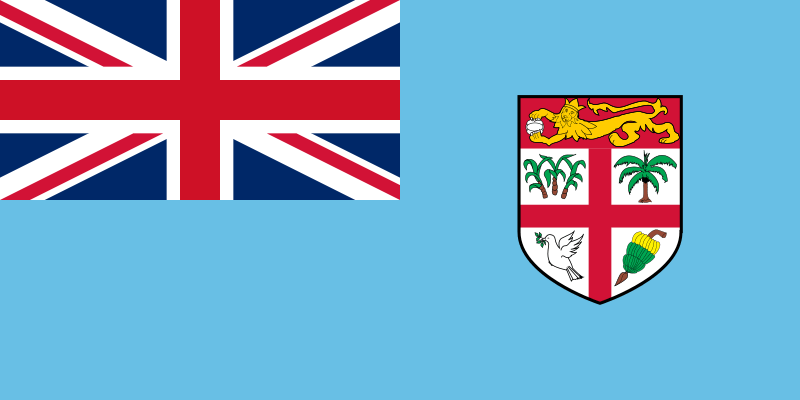
Also in the news, what do you reckon to these? Fiji's getting a new flag - or at least we are when the final design's been agreed. At the moment it looks like this on the left, but there's been a high-profile, nationwide appeal for new designs and the shortlist's on the video below. What's missing? Answers on a postcard...


I've not personally been doing surgery on a ship or designing a flag this past week, but the news immediately around me has seemed a touch more entertaining for the blog than photos of me glazing over at a computer screen! Have been editing the Bachelor of Divinity 'Ethical Principles' course this week and am nearly through. It's all meaty stuff and should make a great addition to the existing courses. 'The Prophets' are waiting in the wings. Splendid coffee from Papua New Guinea helps the addled brain of course - a gift from my dear and lovely neighbour Ana-Latu. 


And God Bless the Baptists! Supporting
ministry training through
coffee growing and marketing. I thoroughly approve.

Wonder if my most recent 
alma mater Spurgeon's
College has thought of
this? Do you suppose
the elevation of South
Norwood Hill and the
tropical rains of Thornton
Heath, Crystal Palace and
environs would produce
the goods?


A prayer

Faithful God,
continue to uphold and guide the work at Pacific Theological College Education by Extension we pray, and steer our course as we put extra effort into the Bachelor of Divinity Distance programme. 

We pray that your Spirit will speed and energise the work, so that new courses may be delivered soon to those in remote areas, excited by the prospect of further studies. 

Help us to meet this growing need as quickly, effectively and affordably as we can, so that practical, purposeful theologians are formed and shaped for the present age, in the Pacific. Amen.